


State of economic relations between Lithuania and Greece does not reflect the potential for cooperation
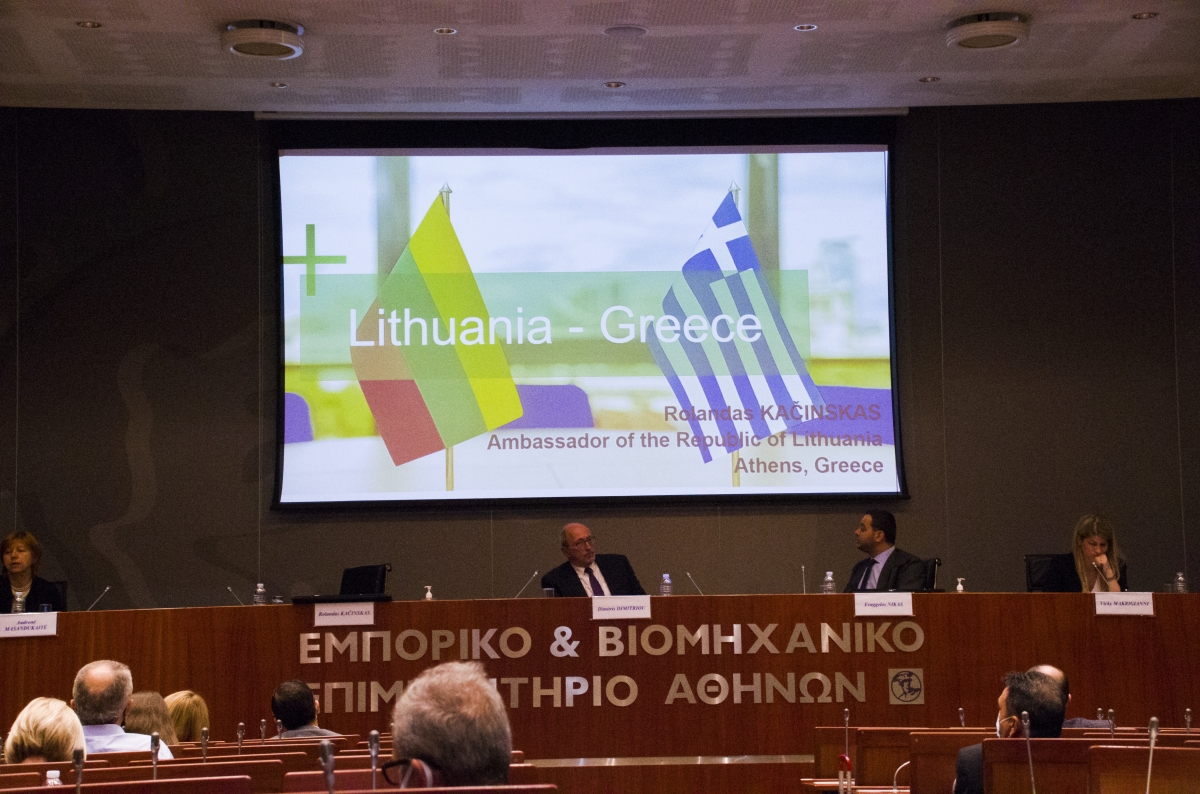


(The following is the article by Rolandas Kačinskas, ambassador of the Republic of Lithuania to Greece, based on a presentation given by him at the Lithuania-Greece Business Forum in Athens on 4 October 2021.) Can two countries without a long tradition of economic cooperation become significant trade and business partners? I am referring specifically to Greece and Lithuania, two countries located on different sides of Europe 1800 km apart. The nearly 100 000 Lithuanian tourists who visit Greece every year would probably say that covering such a distance is not a problem these days. But judging by the movement of goods, services and investments between Lithuania and Greece, the two countries are still far apart.
What do the statistics tell?
The average Greek consumer, who gets an impression about Greece’s foreign trade from the foreign-produced products that he or she sees on the shelves or in the shop windows, is unlikely to have any opinion of the "Made in Lithuania" label. And although one could find in Greek shops Lithuanian hard cheese, smoked meat products, some dairy products, cosmetics and some other items, these and other consumer goods made in Lithuania have a very small share of the Greek market.
Meanwhile, the 'Made in Greece' or, more precisely, 'Grown in Greece' brand is doing better on the Lithuanian market. Edible fruit and nuts are particularly popular, with Greece being the 14th largest import market in Lithuania in terms of sales. The growing popularity of Greek agricultural and food products in Lithuania is also reflected in the opening of several specialized Greek shops in Vilnius in recent years. In addition, a service that allows people to order products directly from Greek farmers and small producers to their homes in Lithuania is also gaining popularity.
Nevertheless, trade between Lithuania and Greece is insignificant, amounting to just €105 million in 2020. The countries exported roughly the same value of goods to each other. Only the fact that the volume of trade between Lithuania and Greece has doubled in the last five years, and that the volume of trade between Lithuania and Greece is almost equal to Greece's trade with Latvia and Estonia put together can add more optimism in the overall picture of bilateral economic relations.
The insignificant volume of Greek-Lithuanian trade is well illustrated by the comparative weight the countries have in relation to each other in their foreign trade.
In 2020, Greece accounted for just 0.2% of Lithuania's total exports and imports of goods. Lithuania's weight in Greek foreign trade was even lower. It accounted for just 0.14% of Greek exports and 0.07% of imports (2019 data).
Similar trends are also observed in trade in services. In 2020, Greece accounted for 0.1% of Lithuania's total exports in services, which amounted to around €11 million. Imports of services from Greece amounted to €33 million, representing 0.6% of Lithuania's total imports of services. However, it is important to note here that the 2020 figures do not reflect the upward trend in imports of services from Greece so far, as trade in services contracted significantly last year due to the COVID-19 pandemic, particularly affecting travel-related services, which account for the largest share of services imports from Greece.
The situation in the area of mutual investments is also not encouraging: as of 31 December 2020, Lithuania's direct investments in Greece amounted to €9.1 million, while Greek investments in Lithuania amounted to €0.9 million.
Only the situation in tourism sector improves the overall picture of economic relations, but there is a very pronounced asymmetry here: 70,000 Lithuanian tourists included in the official statistics and at least up to 20,000 more who travelled to Greece individually, compared to only 6.5 thousand Greek tourists who travelled to Lithuania in 2019.

"Non-priority markets"
There are many reasons why Lithuanian-Greek economic relations are the way they are. Many point out to objective causes such as the relatively small size and depth of the markets, the characteristics of the economic structures of the two countries, the long geographical distance, and poor transport links. Others add that subjective factors such as stereotypes within societies, people's individual attitudes and motives, and weak historical and cultural ties also play a role in business decisions or economic relationships.
Whatever the reasons - and most likely a combination of them - Lithuania and Greece do not identify each other as priority markets. Accordingly, respective countries guide financial and other resources for export and investment promotion towards closer, larger and more familiar markets. This limited focus in turn creates additional obstacles to the development of bilateral economic relations, which in turn creates a vicious circle that does not give a new trajectory to Lithuanian-Greek economic and business relations.
Is the current state of bilateral economic relations all that can be squeezed out of them, and are the underlying causes for that state of affairs unshakeable?
The goal is to discover each other
Cross-border relations between Lithuania and Greece gained momentum in 2004, when Lithuania joined the EU. However, the financial crisis in 2009 put a brake on development of economic relations. Almost a decade was lost in the process of discovering each other. Looking ahead, it is therefore important to realize that Lithuania in 2021 is no longer the same EU’s freshmen with a weak economy, and Greece is not the same country trapped in the grip of crisis.
The Greek perception of Lithuania and its economic muscle changes when they learn that Lithuania, while at least three times smaller than Greece, is not far behind it in terms of exports of goods. According to Eurostat, in 2019, Lithuania, with almost €29.6 billion, and Greece, with €33.3 billion, shared 20th and 21st place in the EU in terms of exports in goods. Even in the Covid-19 "pandemic" year of 2020, Lithuania's exports amounted to €28.7 billion, and judging by the 18.7% increase in exports recorded in January-August 2021 compared to the same period a year earlier, Lithuania's exports in 2021 could exceed €30 billion.
These impressive export figures have a positive impact on the country's employment and incomes, which in turn affect consumption. The latest data published by Eurostat show that the index of material welfare of households, also known as Actual Individual Consumption (AIC), per capita in Purchasing Power Standards (PPS) for Lithuania, was only 4% below the EU average in 2020.
As exports continue to grow and the economy expand (in the first quarter of 2021, the country's real GDP has already surpassed the "pre-pandemic" level observed in 2019), and the country continues to climb in the Doing Business Indicator ranking (Lithuania is now among the top 11 out of 190 countries worldwide), all of this suggest that Greece should take a close look at Lithuania as a promising economic partner.
The same applies to Greece. Lithuanian business should be attracted not only by the rapidly improving macroeconomic indicators in Greece, but also by the government's efforts to stimulate the country's economy and business, to reduce administrative burdens, to speed-up digitalization, to implement the country's extraversion strategy, and to improve the investment climate. In addition, Lithuanian entrepreneurs should look at Greece not only as a country with 11 million permanent inhabitants, but also as a market that attracts an additional 34 million tourists a year, which could serve as a kind of platform for spreading the brand “Made in Lithuania” to different parts of the world.
Untapped opportunities
All this suggests that economic relations between Lithuania and Greece do not reflect the potential for cooperation between the two countries, and that the countries have much more to offer each other in their exchanges than fruit and tourists.
As an example of the potential for economic cooperation in other areas, consider the Lithuanian Armed Forces’ tender won by the Greek company INTRACOM Defense in 2016 for the purchase of internal communication equipment for installation in self-propelled howitzers, fire control centers and armored vehicles. This deal led to the establishment of cooperation with Lithuanian company Elsis TS, including implementation of a long-term investment project in the field of defense industry.
This atypical example of Lithuanian-Greek cooperation shows that economic cooperation and business ties can be successfully forged between the two countries in high value-added economic areas, including in the fields of renewable energy (especially solar energy), ICT, life sciences, start-up ecosystem development, Fintech, electronics and lasers, which are of interest to both sides.
Lithuania has a lot to offer in these areas. A few facts may be of particular interest. Lithuania has the largest ICT industry in the Baltic States, with exceptional potential for both local and foreign development companies. Lithuania has more than half of the global market for picosecond laser spectrometers, and with 10% of the global market Lithuania is one of the world's leading exporters of femtosecond laser systems. Lithuania is developing rapidly as a major electronics manufacturing centre in the Baltic region, with a particular focus on electronics, computing and optics products.
In the context of Covid-19, Lithuania's achievements in the life sciences are particularly noteworthy. In 2019, it generated around 2.9% of the country's GDP, with a strategic goal of reaching 5% of GDP by 2030, making Lithuania one of the leading countries in Central and Eastern Europe in this field. Did you know that components for coronavirus testing and reagents used by companies developing and manufacturing mRNA-based vaccines are being produced in Lithuania? Think of it as indirect Lithuania's contribution to humanity's inevitable victory over the virus.
All the above and other facts suggests that Lithuania might be of interest to Greece as a partner in its own high value-added growth strategy.
In addition, another area where there is great potential for cooperation deserves special mention. This is maritime industries. Lithuania, and more specifically its only port city, Klaipėda, has opted for the so-called "blue economy" strategy for its economic development. Greece could therefore become a natural partner for Lithuania here, both in more traditional maritime industries such as shipbuilding and repair, transport or tourism, and in emerging sectors such as renewable energy (harnessing the power of the waves or the currents of the sea), research and development, and so on. Examples of such cooperation already exist. For example, the University of Klaipėda will collaborate with the Athens University of Agriculture, together with other European partners, on a project funded by the EU's Horizon 2020 programme on the sustainable development of smart coastal cities. In the future, the establishment of an Honorary Consulate of Lithuania in Piraeus should help to increase the number of such examples of cooperation in the maritime industries.
Finally, there are opportunities to find synergies between Lithuanian and Greek economic development, in the context of the EU's Green Deal agenda and the objectives of the EU's economic recovery instrument.
Better and faster: importance of connectivity
Today, travelling between the capitals of Lithuania and Greece would take 443 hours on foot, 30 hours by car, and at least six train changes between Athens and Vilnius by rail. The fastest way to get from one capital to the other would be by plane, taking around 2 hours. 50 minutes, but only during the tourist season and only with one low budget airline. Due to poor connections, the average transit time for freight cars between the capitals is from six to seven calendar days.
Whether road connections will improve will depend on a number of infrastructure projects already underway or planned.
Firstly, both Lithuania and the other two Baltic States, as well as Greece, are seeking to improve rail infrastructure and connections with other European countries. The Baltic States are doing this through “Rail Baltica”, which will connect them by high-speed trains on European tracks to Poland, and then onwards through Poland to the Central European rail networks. The integration of Lithuania into the European rail network will contribute to a significant improvement in future connections between Greece and Lithuania, bearing in mind also Greece's strategic objective of extending the maritime corridor linking the Piraeus with Asian markets towards Central Europe.
A second infrastructure project that could significantly contribute to connecting Greece and Lithuania is the “Via Carpathia” transport route. It would connect the Lithuanian port city of Klaipėda with the northern Greek port of Thessaloniki by highway. This highway would not only be the shortest link between Greece and Lithuania, but would in fact be the first real transport link between the Baltic and Aegean Seas.
Both projects would redefine the traditional West-East connections in Europe, significantly improving the connectivity between the South and the North of the continent and bringing a new quality to trade and communications between them.
And until these major infrastructure projects are completed, the quickest and cheapest way to improve the connection between Lithuania and Greece would be by air. Lithuania would very much welcome a direct flight between Vilnius and Athens operated by a Greek carrier such say "Aeagean Airlines.
More business, stronger Lithuania-Greece ties
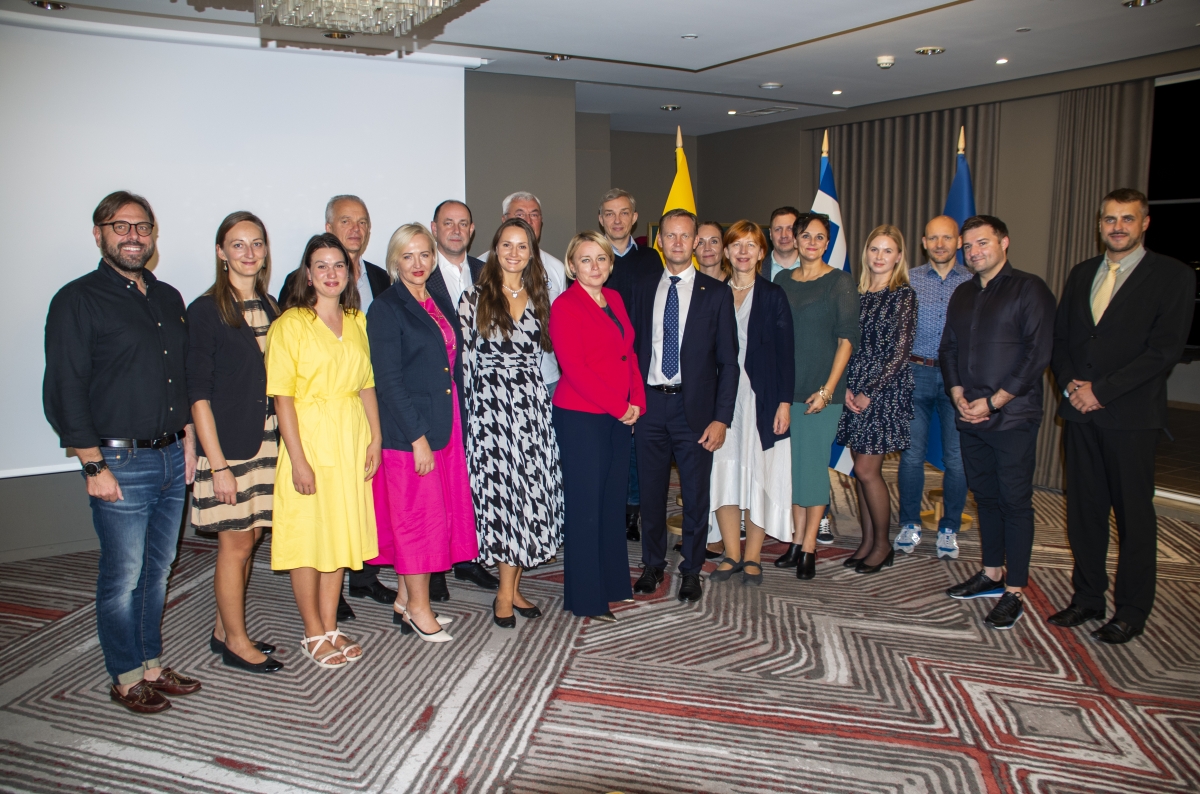
"It is better to see once than to hear a hundred times". This Lithuanian saying also applies to finding ways to strengthen bilateral Lithuanian-Greek business ties. With this in mind, Lithuania and Greece exchanged incoming business missions on 24-25 September 2019 and 3-5 October 2021, during which Lithuania-Greece Business Forums, B2B contact events and visits to local companies were organised. The interest in the missions, the new perception of the country and the contacts established confirm that there are many untapped opportunities for business and economic cooperation between Lithuania and Greece.
Interstate relations between Lithuania and Greece are growing and expanding. This year has been particularly rich in terms of political and diplomatic contacts. It is symbolic that this growth in relationship has been recorded in this year, which marks the 30th anniversary of the restoration of diplomatic relations between Lithuania and Greece, and ahead of the 100th anniversary of the establishment of diplomatic relations between Lithuania and Greece next year. However, one thing is clear: the good political and diplomatic relations between Greece and Lithuania would be even stronger if the two countries were able to fill them with the economic content of cooperation.
***
Greece-Lithuania Business Forum was held in conjuction with the visit of the Lithuanian business mission to Greece, and was ororganized by the Athens Chamber of Commerce and Industry – ACCI, the Hellenic Federation of Enterprises, the Hellenic Investment and Foreign Trade Company “Enterprise Greece” and the Embassy of the Hellenic Republic to Lithuania in collaboration with the Embassy of Lithuania in Athens and the Chamber of Commerce and Industry of Vilnius.
Article in Greek language: Οι οικονομικές σχέσεις Λιθουανίας - Ελλάδας δεν αντανακλούν τις δυνατότητες συνεργασίας


