


The Baltic Way remembered in Athens
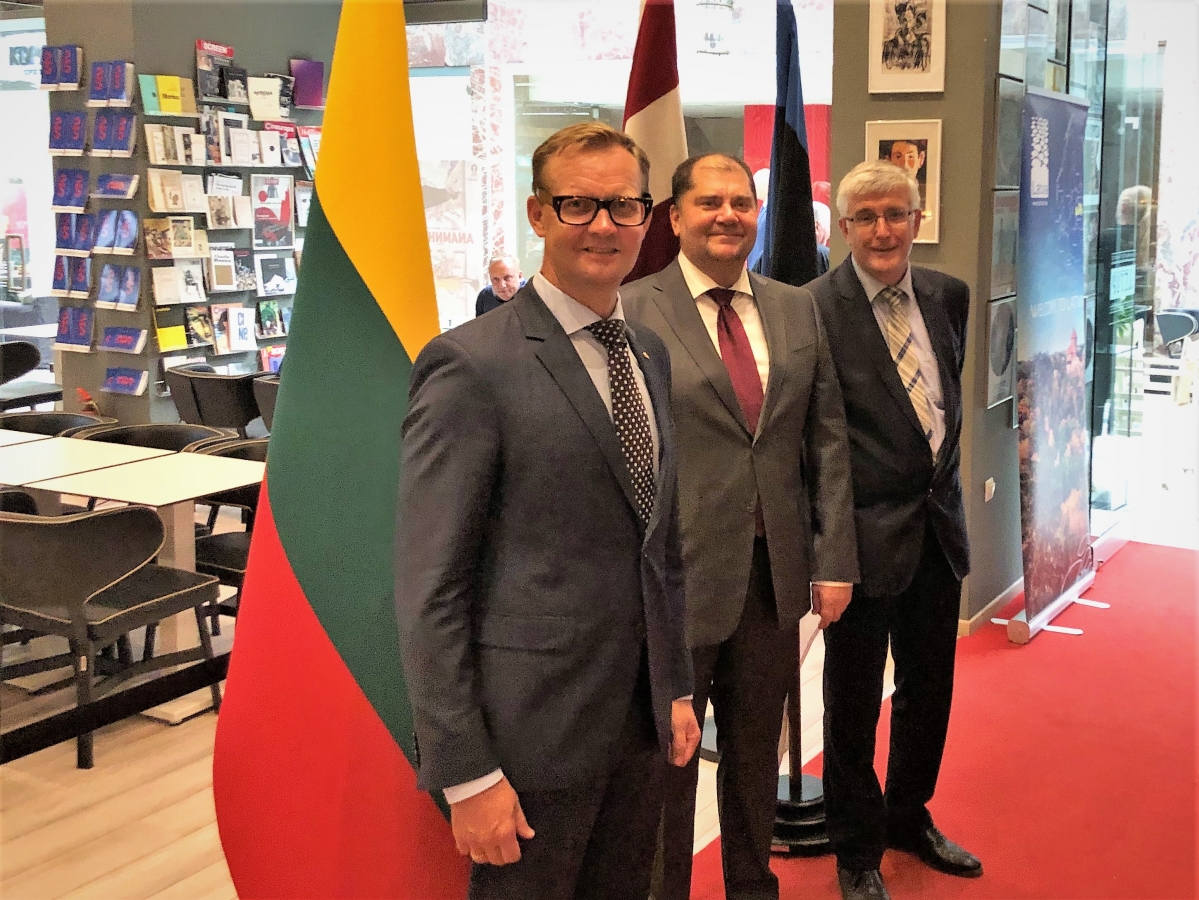
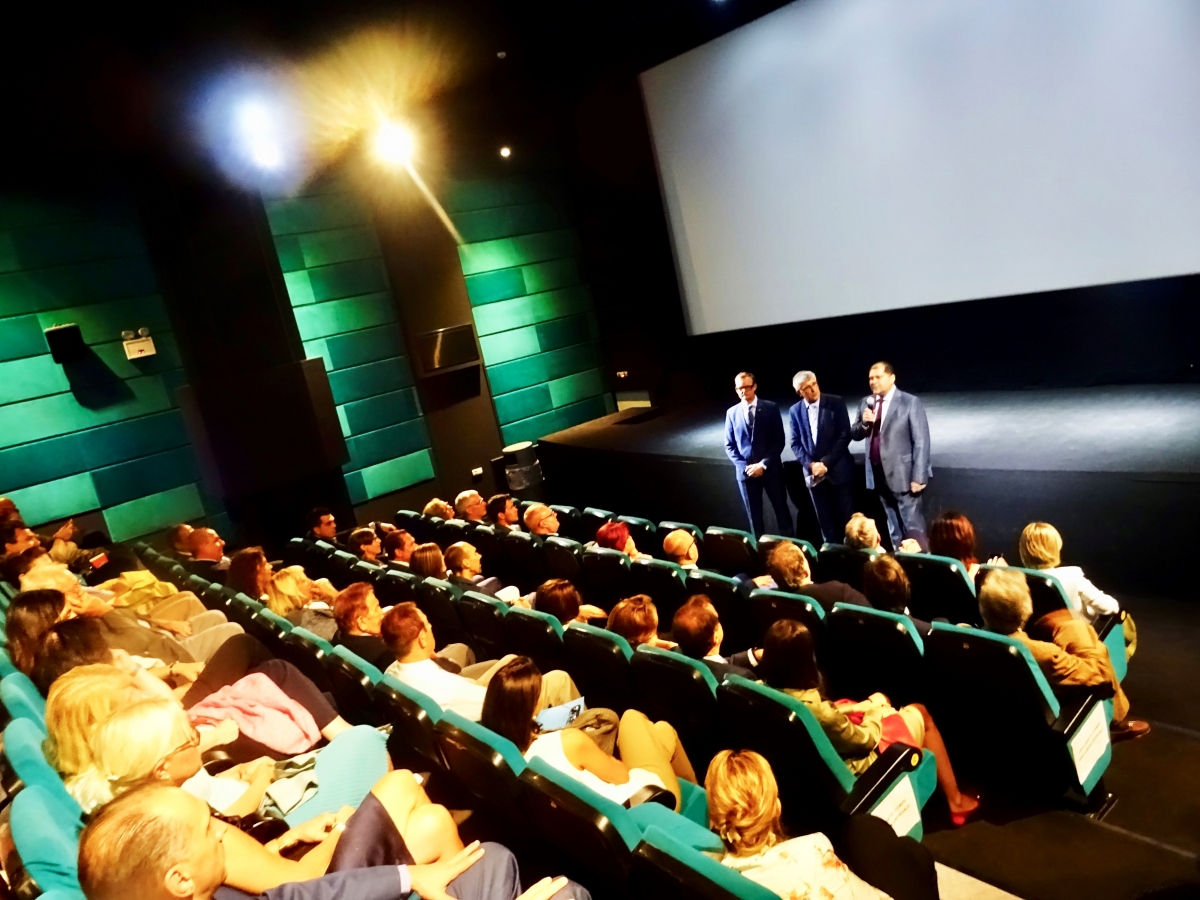
On the 16th of September, Lithuanian, Latvian and Estionian embassies in Greece jointly celebrated the 30th anniversary of the Baltic Way.
The screening of director Ólafur Rögnvaldsson's documentary "Those Who Dare" became the highlight of the event. The film was followed by a virtual exhibition of the Baltic Way photographs and a reception.
The event was attended by Greek officials, members of the diplomatic corps, representatives of the Baltic communities in Athens and journalists.
In his remarks, Lithuania's ambasasdor Rolandas Kačinskas said:
"On behalf of Ambassador Priit Pallum of Estonia, ambassador Māris Klišāns of Latvia, and myself, let me thank you for joining us this afternoon in commemorating the thirtieth anniversary of the Baltic Way.
Thirty years ago, the peaceful campaign of citizens of Estonia, Latvia and Lithuania was dedicated to remembering the 50th anniversary of the Molotov-Ribbentrop Pact, which had not only divided Europe and destroyed independences of the Baltic States, but had also propelled the world to the World War II.
At 7 pm on 23 August 1989, at the sound of a radio signal, two million people stepped in the middle of the road holding hands, forming a 650 km long human chain that extended from the Gediminas Tower in Vilnius, past the Freedom Monument in Riga, to the Tall Hermann Tower in Tallinn, thus symbolically separating the Baltic States from the then Soviet Union.
The echo of this act, unprecedented in the history of mankind, flew instantly around the globe, amazing the world by the idea, magnitude and peacefulness of the Baltic Way. This human chain entered the Guinness Book of Records as the longest in history. And in 2009, the UNESCO included the Baltic way in the Memory of the World Register.
I am sure that many members of the Baltic communities, who are here with us this afternoon, remember this day as a miracle. Indeed, it was the day when two million hearts were beating as one, the day when a clear and unmistakable message was sent across the world about the unbreakable desire for freedom and independence.
That day, it became clear that the Soviet regime was no longer able to contain that flood-ravaged river, or should one say, a tsunami of freedom.
Although the Baltic Way was part of the changes that took place across Central and Eastern Europe, we would like to point out that the pursuit of Baltic freedom stood often at the forefront of other events in this part of the continent, thus being a kind of catalyst for change. Think about the fall of the Berlin wall in East Germany, the Velvet Revolution in Czechoslovakia or the fall of the Nicolae Ceausescu regime in Romania, which all happened after the Baltic Way.
Anyway, it is all a history now, although it is always important to remember the history and learn from it.
For instance, in remembering the Molotov-Ribbentrop Pact, it is important to recall not the fact itself but the fact that it undermined the international law and its principles –i.e., the foundation, upon which relatively small countries such as Greece and Estonia, Latvia and Lithuania depend for their security, freedom and independence.
The Baltic States' struggle for freedom teaches us how important the support and solidarity of other countries is in such critical times.
Using this opportunity, on behalf of three of us, let me thank our partners, including Greece, who helped consolidate the return of the Baltic States to the Western family and join the process of European integration.
Yet there was one country that stood out from the rest the most in early days of our struggle. It was Iceland.
You are about to watch a remarkable 50-minute long documentary film “Those Who Dare” that traces the Baltic nations’ path to independence through the eyes of Mr Jón Baldvin Hannibalsson, the former Icelandic foreign minister whose involvement in challenging the legacy of WWII helped to make Baltic independence a reality.
“Those who dare” is a real political drama, giving an audience a sense of hope. It will remind us that everything is possible if only there is the will.
Iceland does not have an embassy in Athens, here is no resident ambassador, but we are honored with presence of Honorary Consul General of Iceland Mr. Yannis Lyberopoulos at this event today. Thank you for being with us today.
Now, without further ado, I will now hand the floor over to my esteemed colleagues, Estonian and Latvian ambassadors."


